

Database highlight – ARTstor (on JSTOR)
Cambridge University members have access to ARTstor (on JSTOR), which contains over two million high-quality images, curated from leading museums and archives around the world. These images are rights-cleared for education and research.
Scholars can easily examine wide-ranging material such as Native American art from the Smithsonian, treasures from the Louvre, and modern architectural plans from Columbia University.
Users can explore, discover, and interact with images from around the world using a suite of tools that encourage direct interaction with content, including zooming in on images to explore details, comparing and contrasting images side by side, and creating presentations with embedded text and annotations. These tools can help students engage with the material in a more immersive way, enhancing their learning experience in any instructional modality.
Ammi Phillips. Girl in Red Dress with Cat and Dog. 1830-1835. Image and data from the American Folk Art Museum.
Also available via the Cambridge E-Resources A-Z
ARTstor have produced some colouring cards for mindfulness and well-being. We hope you enjoy them!
e-MAREFA : trial access
Trial access is now available to e-Marefa, a comprehensive online database of academic content in Arabic and English, with a focus on materials from the Arab world.
Trial access is now available until 17 May 2024 at this link.
Please tell us what you think about this resource using our feedback form.
Here’s a brief overview of what e-Marefa offers:
- 2400+ academic journals and statistical periodicals in full text
- 650,000+ full text articles
- 33,000 theses and dissertations in full text
- 30,000 e-books, ebook chapters and book reviews
- 1,000,000 research abstracts
- 25 specialized databases covering thematic and discipline-specific areas such as Middle Eastern studies, Arabic literature, and regional conflicts.
“Marefa Database is a leading and integrated Arab database of full text and comprehensive metadata that contains around 7,000,000 records including academic journals, articles, theses and dissertations, e-books and book reviews, statistical reports, research abstracts and conference proceedings, and covering all disciplines and fields.” – from the publisher website
Stress Awareness Month – Kanopy resources
Stress Awareness Month has been running in the UK every April since 1992 to raise awareness of the causes of stress and to offer guidance on where support can be found when dealing with stress.
If you think you might be suffering from stress the university Occupational Health team have put together some Advice & Guidance.
The Student Support services are available for anyone at the university looking for help with wellbeing and counselling.
We have put together a list of videos available on the Kanopy platform that take a look at stress. There are many other titles on the platform that you may find useful.
Understanding and Managing Stress
“One fundamental aspect of stress is that different people respond to similar events in different ways. To understand why, Professor Sanderson examines the nature of stress — in relationships, in work, and in the environment — and shows how stress can be helpful (e.g., fight or flight) or harmful (e.g., PTSD). See how to better manage your stress.”
Stress, Learning, and Memory
“This episode explains the science behind how short-term stress enhances memory and learning, while chronic stress may actually work to kill neurons in the hippocampus.”
The Stress of Learning and Mastery
“Over half of Americans are stressed about their performance at work. Here, learn the importance of deliberate practice: perhaps the most effective strategy for cultivating competence at work. Then, ponder the idea of the “imposter syndrome,” learn how to receive feedback, dispel the myth of “magical transformation,” and more.”
How Stress and Emotion Affect Learning
“Ask almost anyone where they were when they heard about major events like the 9/11 attacks or the Challenger explosion and they remember immediately. Why, psychologically, do those memories remain so vivid? And do short, quick moments of stress versus chronic stress affect our memories differently? How? These answers and more await you.”
Channeling Stress for a Competitive Edge
“Performance stress can help you perform at a higher level – if you know how to control it. First, learn how to repurpose this kind of stress as excitement. Then, discover what research says about how posture and “flow” (immersion in the moment) can help you perform better in stressful situations.”
How Your Brain Manages Stress
“Though stress is usually considered negative, research reveals it is our perceived inability to control stress that does most of the damage. Unravel how the brain responds to stress on a neurological and chemical level, and survey what neuroscience research has to say about how to reduce stress in your life by learning to control it.”
Stress and Your Body collection
“Feeling stressed? You’re not alone. Stress is a fact of life. And the key to changing how stress affects you is a thorough knowledge of how it works—which you’ll find in the 24 fascinating lessons of Stress and Your Body, taught by one of the world’s foremost researchers on stress and neurobiology.”
Choose Your Adventure: Choose Your Stress
“Choice and stress are fundamentally intertwined. What does learned helplessness tell us about our sense of control? Is too much choice more stressful than fewer choices? Is someone obsessed with making the best possible choice happier than someone who’s not? How can you make better decisions under stress?”
Learning from Your Stress
“Dr. Bonura leaves you with skills to learn from the stress in your life. Discover why it’s important to feel a sense of purpose; how the frequency of positive experiences you have is more important than their intensity; and why it truly is important to appreciate the small things.”
Turning Stress into Strength
“Your response to stress is intimately related to how you view the world. In learning to neutralize stress, map your own emotional life and consider research on the effects of positive emotions. Then learn a technique, using focused breathing and imagery, for reaching a positive feeling state and disarming the stress response.”
Database highlight – Vet Anatomy
Vet Anatomy bu IMAOIS is available to members of the University of Cambridge via the link in the Databases A-Z.
vet-Anatomy is a high-quality atlas of veterinary anatomy based on medical imaging, created under the supervision of Dr. Susanne AEB Boroffka, dipl. ECVDI, PhD and Antoine Micheau, MD. It’s based on the same framework as the popular award-winning e-Anatomy, but dedicated to animals.
- Browse between the different animal anatomical structures of the vet-Anatomy atlas, using the tree structure.
- Display the definition and anatomical pictures (illustrations, medical imaging) of the selected structure and click on the images to access the dedicated anatomical module.
- Search for specific anatomical structures.
Non-members of the University can get access to vet-Anatomy using the Cambridge University Library PCs. Details about joining the University Library
Database highlight – Biodiversity Heritage Library (BHL)
In celebration of National Library Week, we would like to highlight the Biodiversity Heritage Library (BHL), an open access digital library for biodiversity literature and archives. A worldwide consortium of natural history and research libraries (including Cambridge University Library) contribute to the BHL by digitising the natural history literature held in their collection and making it freely available for open access.
Reisen im Süden von Ost-Sibirien in den Jahren 1855-1859, incl. Bd.1 (1862)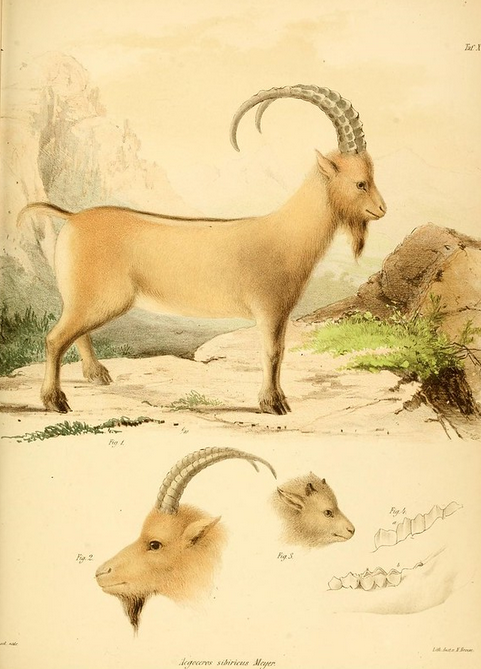
You can search for orginal species descriptions in the BHL (e.g. Reisen im Süden von Ost-Sibirien in den Jahren 1855-1859) and gain historical perspective on an organism, person or place via original field notes (e.g. Charles Darwin’s Library). You can also find publications by museum and nature society journals, which are not represented by large publishers.
For high quality freely accessible illustrations go to the BHL Flickr page. You can search for topics and common or taxonomic names by clicking on the magnifying glass just above the images.
Happy exploring!
Also available via the Cambridge E-Resources A-Z
Africa commons
Through the support of anonymous donors, Cambridge University now has access to three of the four collections in Africa commons,
African History & Culture An index, search engine and preservation tool for more than 500,000 openly available books, magazines, and other primary sources.
Black South African Magazines The first and only digital collection of magazines created for Black audiences in Africa from 1937 to 1973.
Southern African Films & Documentaries Hundreds of African documentaries, oral histories, and other films for study and learning.
Cambridge is proud to support Africa commons, a project to digitize, disseminate, and discover African cultural materials. “Our aim is to enable Africa easily to control and access its archival riches—those within Africa and items residing internationally. We help preserve African content and enable African scholars easily to find and access expressions of their heritage in Western collections.”
Read more about Africa commons on the Coherent Digital website here.
Africa commons includes the full run of DRUM available at this collection link. Drum Magazine was once the most widely read magazine in Africa. Its journalists influenced political outcomes and are credited with changing the way Black South African, Indian, and Multiracial communities were represented in society. Drum became an important platform for a new generation of writers and photographers and it served as an important vehicle for voicing resistance – from the Defiance Campaign of 1952 to the Sharpeville Massacre in 1960. The magazine covered a wide range of topics, including politics, culture, sports, and entertainment.
Read the story on the Cambridge Centre of African Studies Library blog here.
Overton
Cambridge University now has access to Overton, THE database of policy documents and the relationships between them.
We are delighted to introduce Overton to Cambridge, the world’s largest searchable index of policy documents, guidelines, think tank publications and working papers.
Overton provides citations to policy documents and government and non-government bodies unpublished and published documents. Overton then enables users to focus on their institutions’ influence on and input into the research informing these documents. For example, “70,000 policy documents citing University of Cambridge scholarship” or “Clinical guidance documents citing University of Cambridge research”.
Access Overton via this link or via the Cambridge University Libraries A-Z. You will be prompted to create an account with your @cam.ac.uk email and then can login at app.overton.io.
Overton is different, and innovative, and Cambridge has already enjoyed successful trial access earlier this year. Overton describes itself as a “responsible data custodian” and highlights how it collects and organizes its data in these handy bullet points. We are delighted to be on board with Overton in its support for DORA San Francisco Declaration on Research Assessment.
Learn more about Overton and how to get the most out of it via its knowledge base.
Find out about the latest developments on the platform via Overton’s blog.
Overton has a JSON API. See
Using the Overton APIIn terms of what exactly you will find in Overton –
“There isn’t a broadly accepted, pragmatic definition of what a “policy document” is – in the context of Overton we define them very broadly as documents written primarily for or by policymakers that are published by a policy focused source.
We’re interested in not just the policy or legislation itself but in the evidence and thinking that has influenced it, which usually involves other groups and might cover things like technical reports, policy briefs and speeches.
We collect policy documents from governments and official bodies but also from IGOs, some NGOs and think tanks. This is the “policy focused source” aspect: we want to collect documents from organizations that explicitly aim to influence government policy by producing research or publications. We can generally tell if an organization is policy focused by looking at how often it is being cited by government sources in Overton.
We try to strike a balance – we want to collect as many documents relevant to the qualitative analysis of policy decisions as possible while still being able to describe fairly clearly what is and isn’t included in the Overton index, which is important for some types of quantitative analysis.”
New anatomy visualization resource – Visible Body
A new anatomy visualization tool Visible Body is now available to current staff and students of Cambridge University.
Cambridge University members can access Visible Body on or off campus at this link.
Visible Body is also available from the Cambridge University Libraries A-Z and in the list of resources for Clinical Medicine.
On the Welcome page you will be asked for your email and to create a password. Please proceed to enter your @cam.ac.uk email address and create a password. Use these to access Visible Body in future if prompted.
Please be warned that the first time you use Visible Body on your device, the site may be a bit slow to load. This is because the resource contains visualization tools and scripts that take a few moments to load. You will see a message in the bottom right of your browser advising you not to reload the page.
Visible Body is an interactive 3D visualization and learning tool of human anatomy.
For help using Visible Body please consult the Clinical Medicine team.
New Anthropology journals – Berghahn Open Anthro collection
Cambridge University Libraries now makes available all the journals published by Berghahn in its “Open Anthro” collection.
Cambridge anthropologists can now read double the journals formerly available and Cambridge now supports the conversion to full open access of articles published in these journals.
Launched in 2020, Berghahn Open Anthro is a subscribe-to-open model being piloted by Berghahn Books in partnership with Libraria. This model was developed in part through a 2019 ground-breaking collaborative meeting between publishers, libraries, funders, and OA experts that was held at MIT.
Learn more about Berghahn’s goal of attaining an equitable path to open access using the subscribe-to-open (S2O) model; read The Berghahn Open Anthro Journey: Embarking on a Discipline-Driven Equitable Open Access Initiative
Complete list of journals in Berghahn Open Anthro, available for discovery in iDiscover:-
Anthropological journal of European cultures
Anthropology of the Middle East
Conflict and society : advances in research
Ethnologia Europaea : Journal of European ethnology (To be in iDiscover soon)
Focaal : European journal of anthropology
Sibirica : the journal of Siberian studies

‘Integrating Human to Quality’ : Capacity Building across Cambodian Worlds in The Cambridge Journal of Anthropology Author: Casper Bruun Jensen https://doi-org.ezp.lib.cam.ac.uk/10.3167/cja.2017.350110 ‘Integrating Human to Quality’, Street 63, Phnom Penh.
Database highlight – Zoological Record (Web of Science)
Members of the University of Cambridge have access to Zoological Record from Web of Science both on and off campus. On campus only access is also available for members of the University Library.
To access, select Zoological Record from the “Search in” dropdown on the Documents tab on the Web of Science platform.
The world’s leading taxonomic reference and oldest continuing database of animal biology.- Keep up on all aspects of animal biology and biodiversity issues.
- Determine the first appearance of an animal name or new species and track taxonomic and nomenclatural changes.
- Search with the help of extensive thesauri, including subject, geographical, paleontological and taxonomic classifier.
“The evolutionary history of wombats (Vombatidae) is poorly understood. Molecular clock estimates suggest they diverged from phascolarctids (the family that includes their closest living relative, the koala) around 40 Ma, but they do not appear in the fossil record until the early Miocene.”
Wombat image from the Biodiversity Heritage Library from ‘A new species of hairy-nosed wombat’ by De Vis, Charles Walter (Annals of the Queensland Museum, vol 5, pages 14-16).
Quote from ‘A new species of Miocene wombat (Marsupialia, Vombatiformes) from Riversleigh, Queensland, Australia, and implications for the evolutionary history of the Vombatidae.’ Brewer, Philippa; Archer, Michael; (…); Price, Gilbert J. (Palaeontologica Electronica, 2018, 21 (2) , pp.21.2.27A)
Database highlight – Fannie Lou Hamer: Papers of a Civil Rights Activist, Political Activist, and Woman.
Members of the University of Cambridge have access to Fannie Lou Hamer: Papers of a Civil Rights Activist, Political Activist and Woman from Gale Primary Resources both on and off campus. On campus only access is also available for members of the University Library.
Fannie Lou Hamer was an voting rights activist and civil rights leader. She was instrumental in organizing Mississippi Freedom Summer for the Student Nonviolent Coordinating Committee (SNCC), and later became the Vice-Chair of the Mississippi Freedom Democratic Party, attending the 1964 Democratic National Convention in Atlantic City, New Jersey, in that capacity. Her plain-spoken manner and fervent belief in the Biblical righteousness of her cause gained her a reputation as an electrifying speaker and constant activist of civil rights.
The Fannie Lou Hamer papers contain more than three thousand pieces of correspondence plus financial records, programs, photographs, newspaper articles, invitations, and other printed items. The papers are arranged in the following series: Personal, Mississippi Freedom Democratic Party, Freedom Farms Corporation, Delta Ministry, Mississippians United to Elect Negro Candidates, Delta Opportunities Corporation, and Collected Materials.
Text from the Gale Primary Resources platform.
Database highlight – Women and Transnational Networks (NCCO)
Cambridge University members have online access to Nineteenth Century Collections Online (NCCO): Women and Transnational Networks on the Gale Primary Sources platform.
Issues of gender and class ignited nineteenth-century debate in the context of suffrage movements, culture, immigration, health and many other concerns. Using a wide array of primary source documents—serials, books, manuscripts, diaries, reports, and visuals—Women and Transnational Networks focuses on issues at the intersection of gender and class from the late-eighteenth century to the era of suffrage in the early-twentieth century, all through a transnational perspective. The collection contains deep information on European and North American movements, but also expands its scope to include collections from other regions.
Researchers and scholars will find rare content related to social reform movements and groups, high and popular culture, literature and the arts, immigration, daily life and religion.
“It was in the month of November, 1877, in the parish of St. Anne’s, Lowell, Mass., as many of you know, that the Girls’ Friendly Society first came into existence and shape in America. It was started by a few persons, who, looking for some mode of influencing Sunday-School girls growing into womanhood, found one in an account given in the Monthly Packet of May, 1875, of the organization ot’ a society in England under that name. The aims and objects of the English society seemed so well suited to our wants, and its construction so well adapted to promote those objects, that a local Girls’ Friendly Society was at once formed, adopting the same rules, and follow¬ ing the same methods.” – Church Work, 1889, Vol.IV (3), p.78.
Also available via the Cambridge E-Resources A-Z
Image credit: Stock Photo ID: 276577 Vintage Photo of the Princess Mary Caravan of The Girls Friendly Society
Database highlight – Gender Feminism and the British Left 1944-1961
On campus access to Gender Feminism and the British Left 1944-1961 is available
This collection contains records compiled by the Communist Party of Great Britain’s (CPGB) Women’s Department during the period 1944–1991. These records include minutes, agendas, and promotional materials from various women’s campaigns, events, and conferences. They also include copies of Link, the party’s women’s magazine, and Red Rag, a controversial journal published by the party’s more militant feminist members.
Together, these items provide a unique insight into the relationship between Western communism and the women’s liberation movement during the post-war era.
The collection is accompanied by three contextual essays written by Professor Kevin Morgan, a senior academic at the University of Manchester.
One of the collections within the collection is CPGB Women’s Department records, 1950-1989.
This volume contains reports, correspondence, and other papers compiled by the CPGB Women’s Department during the period 1950-1989. Subjects covered include women and employment, abortion, and the women’s liberation movement.
Text from the British Archives Online platform.
Database highlight – Perdita Manuscripts : Women Writers 1500-1700
Members of the University of Cambridge can access Perdita Manuscripts on the Adam Matthew platform (Raven login is needed for off campus access). On campus access is available at the University Library for members of the library.
Title: Miscellany in verse and prose (Reference: MS Additional 8460, Cambridge University Library) Lyttelton, ElizabethThis resource is produced in association with the Perdita Project based at the University of Warwick and Nottingham Trent University. “Perdita” means “lost woman” and the quest of the Perdita Project has been to find early modern women authors who were “lost” because their writing exists only in manuscript form. Thanks to the endeavours of the Perdita Project the valuable work of these “lost” women is being rediscovered.
The manuscripts in this site were written or compiled by women in the British Isles during the sixteenth and seventeenth centuries and they have been sourced from archives and libraries across the United Kingdom and the USA. One of the key attractions of Perdita Manuscripts is that it brings together little known material from widely scattered locations. The provision of a powerful searching facility, biographical and bibliographical resources, and contextual essays by academics working in the field, makes this an indispensable resource for students and researchers.
The manuscripts are remarkably varied in their content, making this a rich resource for historians and literary scholars alike:
- Account books
- Advice
- Almanac
- Autobiography
- Biblical writing
- Biography
- Calligraphic writing
- Culinary writing
- Diary
- Drama
- Historical writing
- Medical writing
- Meditation
- Miscellany
- Notebook
- Prayer
- Prose
- Psalms
- Receipt book
- Religious writing
- Sermon notes
- Speech
- Translation
- Travel writing
- Treatise
- Verse
Text from the Adam Matthew platform.
Database highlight – Independent Voices (JSTOR)
Independent Voices is a freely available collection of resources assembled by JSTOR within their Reveal Digital database.
Independent Voices is an open access digital collection of alternative press newspapers, magazines and journals, drawn from the special collections of participating libraries. These periodicals were produced by feminists, dissident GIs, campus radicals, Native Americans, anti-war activists, Black Power advocates, Hispanics, LGBT activists, the extreme right-wing press and alternative literary magazines during the latter half of the 20th century.
Titles in the Feminist collection include:
Titles in the LGBT collection include:
Titles in the Little Magazines collection include:
Database highlight – LGBTQ Archives of Sexuality and Gender
The Archives of Sexuality and Gender from Gale Primary Sources is available to members of the University of Cambridge (on campus, and off campus via Raven) as well as members of the University Library (on campus only).
The Archives of Sexuality and Gender program provides a robust and significant collection of primary sources for the historical study of sex, sexuality, and gender. With material dating back to the sixteenth century, researchers and scholars can examine how sexual norms have changed over time, health and hygiene, the development of sex education, the rise of sexology, changing gender roles, social movements and activism, erotica, and many other interesting topical areas. This growing archival program offers rich research opportunities across a wide span of human history.
The Archives includes the collections:
LGBTQ History and Culture Since 1940, Part I
With material drawn from hundreds of institutions and organizations, including both major international activist organizations and local, grassroots groups, the documents in the Archives of Sexuality and Gender: LGBTQ History and Culture since 1940, Part I present important aspects of LGBTQ life in the second half of the twentieth century and beyond. The archive illuminates the experiences not just of the LGBTQ community as a whole, but of individuals of different races, ethnicities, ages, religions, political orientations, and geographical locations that constitute this community. Historical records of political and social organizations founded by LGBTQ individuals are featured, as well as publications by and for lesbians and gays, and extensive coverage of governmental responses to the AIDS crisis. The archive also contains personal correspondence and interviews with numerous LGBTQ individuals, among others. The archive includes gay and lesbian newspapers from more than 35 countries, reports, policy statements, and other documents related to gay rights and health, including the worldwide impact of AIDS, materials tracing LGBTQ activism in Britain from 1950 through 1980, and more.
LGBTQ History and Culture Since 1940, Part II
The Archives of Sexuality and Gender: LGBTQ History and Culture Since 1940, Part II provides coverage of the development, culture, and society of LGBTQ groups in the latter half of the twentieth century. It provides new perspectives on a diverse community and the wealth of resources available in the archive allow for creating connections amongst disparate materials.
Since the 1940’s, LGBTQ groups have steadily emerged into society, fighting for equal rights and making their voices heard. Even within the LGBTQ community though, some groups have not been as well represented, or received as much of the limelight, as the more “mainstream” lesbians and gays. LGBTQ History and Culture Since 1940, Part II provides coverage of these groups, including LG student groups, Two-Spirit people, the Jewish LGBTQ community, LG Christian groups, and bisexual, transvestite, and transgender communities.
Sex and Sexuality, Sixteenth to Twentieth Century
The Archives of Sexuality and Gender: Sex and Sexuality, Sixteenth to Twentieth Century is a collection like no other. It is made up of more than five thousand rare and unique books covering sex, sexuality, and gender issues across the sciences and humanities and throughout history. It is the variety of titles and subjects in this archive that make the research opportunities intriguing.
The Archives of Sexuality and Gender: Sex and Sexuality, Sixteenth to Twentieth Century looks at gender and sexuality in the centuries leading up to, and inclusive of, the period covered in Parts I and II, providing context to the materials in those collections. It examines topics such as patterns of fertility and sexual practice; prostitution; religion and sexuality; the medical and legal construction of sexualities; and the rise of sexology. It not only offers a reflection of the cultural and social attitudes of the past, but also a window into how sexuality and gender roles were viewed and changed over time.
International Perspectives on LGBTQ Activism and Culture
Archives of Sexuality and Gender: International Perspectives on LGBTQ Activism and Culture examines diversity in underrepresented areas of the world such as southern Africa and Australia, highlighting cultural and social histories, struggles for rights and freedoms, explorations of sexuality, and organizations and key figures in LGBTQ history. It ensures LGBTQ stories and experiences are preserved. Among many diverse and historical 20th century collections, materials include: the Papers of Simon Nkoli, a prominent South African anti-apartheid, gay and lesbian rights, and HIV/AIDS activist; Exit newspaper (formerly Link/Skakel), South Africa’s longest running monthly LGBTQ publication; Geographic Files, also known as “Lesbians in…” with coverage from Albania to Zimbabwe; and the largest available collection of digitized Australian LGBTQ periodicals.
Image by Mircea Iancu from Pixabay
“Photographs Donated by Simon Nkoli.” Simon Nkoli Collection, 1977 to 1998, Gale, a Cengage Company, 1990-2000. Archives of Sexuality and Gender, Gale Document Number DFMYRQ121639016
Text from Gale Primary Resources
New A-Z list of databases for Chinese Studies
A LibGuides Databases A-Z page for Chinese eresources is now available to Cambridge University members. Our Head of Chinese Section, Dr Yan He writes:
“Cambridge University Library purchased or subscribed to a few major databases for Chinese studies including Erudition Ancient Books (爱如生古籍库) databases, National Palace Museum Journals Archive (故宮期刊知識庫), and Dacheng Guzhidui Full Text Periodical Database(大成故纸堆 ) in the past two years.
These databases provide robust support for our faculty, students and researchers at Cambridge along with our print collections. The digital content contains primary sources and secondary sources for Chinese studies in humanities and social sciences. One of our professors commented to the two recent available databases: “these databases are essential to my research and teaching.” And one MPhil student said his dissertation cannot be done without one digital newspaper database.”

12 key databases for Chinese Studies:
CHANT Databases (新漢達文庫) (包括甲骨文、金文、先秦兩漢、魏晉南北朝、竹簡、類書、説文解字) – give full-text access to all traditional texts from the Pre-Han (pre 220AD) period up to the Six Dynasties (581 AD)
Chinese Periodical Full-text Database (1911-1949) (民国时期期刊全文数据库) – contains around 10 million pieces of writing in over 20,000 different kinds of periodicals published from 1911 to 1949
CNKI/CAJ-CJP Serials Databases (中国知网期刊库)- from Tsinghua University, this database contains academic journals, conference proceedings, newspapers, reference works and patent documents
National Palace Museum Journals Archive (故宮期刊知識庫) - part of Taiwan Academic Classics, includes 《故宮英文年刊》,《故宮文物月刊》,《故宮學術季刊》and《故宮季刊》
Dacheng Guzhidui Full Text Database(大成故纸堆 ) – full-text periodical database covering approximately 7,000 journals published in China from 1830 to 1949
Diaolong Full-Text Database of Chinese and Japanese Ancient Books (雕龍 : 中國日本古籍全文檢索資料庫) – includes over 30 thousand titles of ancient Chinese and some Japanese books
Duxiu(读秀)- contains over 2 million core Chinese monographs and journals, and 500 yearbooks published in mainland China
Late Qing Full-text Database (1833~1911) (晚清期刊全文数据库) – developed by Shanghai Library, this database contains 304 journals published during the late Qing Dynasty from 1833 to1911
Erudition Ancient Books (爱如生古籍库) – includes pre-20th century texts with full-text and images from a variety of subject areas organized into four sections: Philosophy and Science, History and Geography, Art and Literature, and General Works
Oxford Language Dictionaries Online
Shen Bao Digital Archive (申报 1872-1949)- this archive gives a unique insight into the transition of China from the nineteenth century until Mao
Taiwan Electronic Periodical Services (台灣電子期刊服務網) – this full-text database covers many of the journals published in Taiwan in humanities and social sciences
More information about these databases is available from the UL Chinese Section website about e-resources for Chinese.
Highlighting the LGBTQ+ video collections on Kanopy
Kanopy have introduced a new LGBTQ+ collection of films that are available to current members of the University of Cambridge. Access is available via the Databases A-Z and University of Cambridge credentials are needed to create an account on the platform before you can stream the videos.
Films and documentaries available in the Kanopy LGBTQ+ collection include:
Rent – Based on Puccini’s classic opera La Boheme, Jonathan Larson’s revolutionary rock opera RENT tells the story of a group of bohemians struggling to live and pay their rent in the gritty background of New York’s East Village. “Measuring their lives in love,” these starving artists strive for success and acceptance while enduring the obstacles of poverty, illness and the AIDS epidemic.
Kumu Hina – Imagine a world where a little boy can grow up to be the woman of his dreams, and a young girl can rise to become a leader among men. Welcome to Kumu Hina’s Hawai’i. An incredible docu-drama that unfolds like a narrative film, KUMU HINA reveals a side of Hawai’i rarely seen on screen.
A Worm in the Heart – Shot in six cities along the legendary Trans-Siberian railway, this documentary follows queer Irish filmmaker Paul Rice and his boyfriend Liam, as they go undercover to meet with members of the LGBTQ+ community in Russia.
The Times of Harvey Milk – A true twentieth-century trailblazer, Harvey Milk was an outspoken human rights activist and one of the first openly gay U.S. politicians elected to public office; even after his assassination in 1978, he continues to inspire disenfranchised people around the world.
The Kanopy Gender Studies collection also offers a range of titles looking at gender roles, including:
Expanding Gender – These three short documentaries explore the varied identities of trans and gender expansive youth and young adults.
Masculinity / Femininity: Concepts of Gender – Masculinity/Femininity is an experimental documentary that challenges normative notions of gender, sexuality and performance. Experimental filmmaker Russell Sheaffer’s Masculinity/Femininity takes over where his short film starring James Franco, Masculinity & Me, left off.
The Gender Representation in Media collection includes the titles:
A Bit of Scarlet: Gay Characters in Post-War British Cinema – Any minority craves images of itself, and this compilation of clips from Britain’s post-war cinema archives is a testament to the closeted appearances of gay characters and sentiments.
Drag Becomes Him – An intimate glimpse inside the life of internationally acclaimed drag performer Jinkx Monsoon. The film follows the passionate pursuits that transformed a working class boy in a struggling family to an illustrious performer on a global stage.
Image by All_CC0_Public_domain from Pixabay
Crime drama on Kanopy – A watch list inspired by Cambridge University Library’s upcoming exhibition ‘Murder by the Book: A celebration of 20th century British Crime Fiction’
Inspired by Cambridge University Library’s upcoming exhibition ‘Murder by the Book: celebrating 20th century British crime fiction’ we invite you to take a look at some of the murder mystery films and shows available online to members of the University of Cambridge on the Kanopy platform.
Access is available via the Databases A-Z and University of Cambridge credentials are needed to create an account on the platform before you can view.


Murder mysteries from the big screen:
Cast a Dark Shadow – A British fortune-hunter playboy is killing his rich wives in order to inherit their wealth. Based on the 1952 play Murder Mistaken by Janet Green. (1955)
Cowboys – A compilation of six three minute short animated films which comment on contemporary values through a reinterpretation of the myths of the old Wild West. Film three is Murder! – an eye for an eye, a tooth for a tooth. The silent majority get their way. (1992)
Deadly Sweet – A French actor finds his business contact lying murdered on the floor. Rather than call the police, he decides to protect the young woman at the scene and nail down the true killers, putting him on a collision course with the London underworld. Loosely based on the novel Il sepolcro di carta written by Sergio Donati. (1967)
Jet Storm – Passengers on a trans-Atlantic flight from London to New York discover that one of them believes a fellow passenger is the hit-and-run driver who killed his child and has smuggled a bomb on board and intends to use it. (1959)
Jigsaw – A woman is found murdered in a house along the coast from Brighton. Local detectives Fellows and Wilks lead an investigation, methodically following up leads and clues. Based on Sleep Long, My Love by Hillary Waugh (1962)
Loving Memory – A brother and sister living in an isolated farmhouse in Yorkshire accidentally run down and kill a cyclist. (1970)
Sherlock Holmes – Terror by Night – The film’s plot is a mostly original story not directly based on any of Arthur Conan Doyle’s Holmes tales, but it uses minor plot elements of “The Adventure of the Blue Carbuncle,” “The Adventure of the Empty House,” “The Disappearance of Lady Frances Carfax,” and The Sign of Four. (Wikipedia) (1946)
Sherlock Holmes – The Woman in Green – The film follows an original premise with material taken from “The Final Problem” (1893) and “The Adventure of the Cardboard Box . (Wikipedia) (1945)
The Hawk – A Hitchcockian style thriller of a housewife who thinks her husband is a serial killer. (1993)
Wanted for Murder – As the son of a Victorian hangman is driven insane by thoughts of his father’s profession, the young man emulates his father by strangling young women. Based on a play of the same name by Terence de Marney and Percy Robinson. (1946)



The Hitch-hiker – From the USA. The only film noir film to be directed by a woman (Ida Lupino). (1953)
Les Vampires – From France. An intrepid reporter and his loyal friend battle a bizarre secret society of criminals known as The Vampires. (1915)
Salvatore Giuliano – From Italy. Filming in the exact locations and enlisting a cast of native Sicilians once impacted by the real Giuliano, director Francesco Rosi harnessed the facts and myths surrounding the true story of the bandit’s death to create a startling exposé of Sicily and the tangled relations between its citizens, the Mafia, and government officials. (1961)
The Flying Ace – From the USA. A rural crime drama revolving around a pair of rival aviators,THE FLYING ACE illuminates the fact that many films made for African-American audiences were less concerned with race than with making popular entertainment in the traditional Hollywood style. (1926)
Judex – From France. This effortlessly cool crime caper, directed by Georges Franju, is a marvel of dexterous plotting and visual invention. (1963)


Murder on the small screen:
Cruel Train – Based on Emile Zola’s ‘La Bete Humaine’, this stylish film noir is set in Britain during the Blitz.
Dalziel & Pascoe: S2, S3, S4 – Andy Dalziel does not suffer fools gladly. So when the inexperienced, soft-spoken, whiz-kid graduate Peter Pascoe joins his team at Mid-Yorkshire CID, there could be problems. Based on a book series by Reginald Hill. (1996-2007)
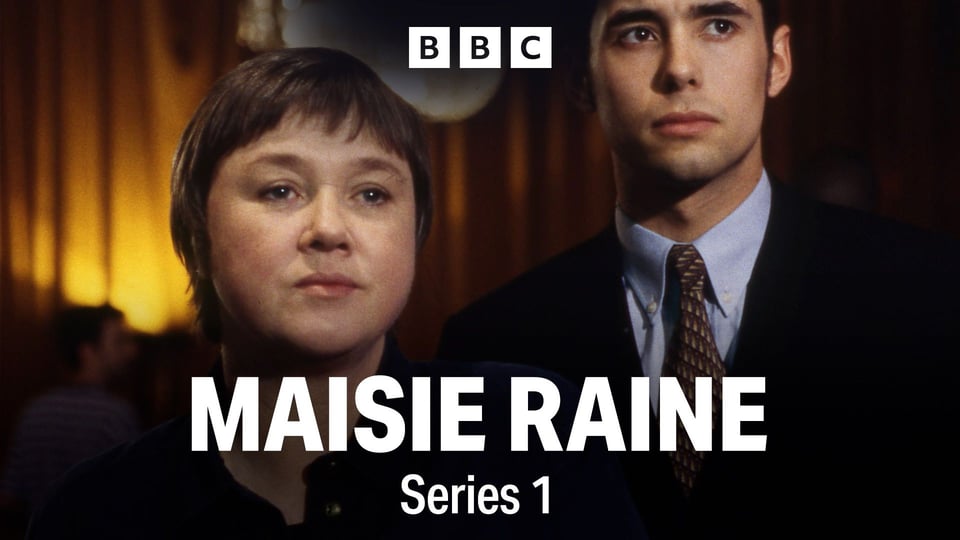
Maisie Raine: S1 – Detective Inspector Maisie Raine is a no-nonsense policewoman with years of experience and an instinct for people in trouble. (1998)
Father Brown – In the idyllic English countryside of the 1950s, murder and foul play are afoot. Based on the book series by G.K. Chesterton. (2013-)
Luther – Idris Elba stars as maverick detective John Luther in this gripping, smart and entertaining thriller. (2010-2019)
Quirke – A consultant pathologist in the Dublin city morgue in the 1950s, Quirke is a powerful character more at ease among the cold silent slabs than the company of his fellow men. Based on a book series by John Banville.(2014)
Scott & Bailey – Moving and exciting drama series follows the lives of Janet Scott and Rachel Bailey – Detective Constables in a Manchester Major Incident Team led by the formidable DCI Gill Murray. (2011-2016)
Death in Paradise – DI Richard Poole is sent to the paradise island of Saint-Marie in the Caribbean to solve an impossible murder. A book series was created by Robert Thorogood based on the TV series. (2011-)
The following text is taken from our day 11 of our 2023 Advent Calendar, authored by Melendra Sutliff Sanders, Research Support Librarian / German / Film Studies, Modern & Medieval Languages and Linguistics Library.
Looking for some thought-provoking entertainment?
Have a look at Kanopy’s collection of award-winning films and documentaries.
Follow the University of Cambridge Kanopy Link to create account. All you need is your University of Cambridge credentials.
Once you’ve logged in, you can stream 100s of award-winning films and television shows. It’s easy to search for specific titles. Or, if you’re open to suggestions, check out the Browse options.
All films have close captioning and can be viewed from anywhere in the world.
Visit the Film and Screen Studies LibGuide for access to more resources available to you in Film Studies.
Aris & Phillips Classical Texts Online – trial access
Students and faculty at the University of Cambridge now have online access to select content in Aris & Phillips Classical Texts Online as part of a 30-day free trial taking place from January 22nd 2024 to February 22nd 2024. Please send us your feedback about this trial via the online feedback form.
Aris & Phillips Classical Texts Online makes available over 150 invaluable editions of Greek and Latin texts. The Aris & Phillips Classical Texts series was founded in 1979 to publish modern editions of Classical Greek and Latin texts, with substantial introductions, facing-page text and English translation, with extensive accompanying commentaries. Volumes are designed to be accessible to those without Greek or Latin and support those learning the original language.
You can access 75 volumes in classical studies in the free trial collection. Titles included in the trial include:
Longus: Daphnis and Chloe
This edition of Daphnis and Chloe , the best known of the Greek romances, provides the first modern commentary in English on this intriguing work. This is the story of two young people growing up as goatherd and shepherdess, and their discovery of love, sex and their true selves.
Augustine: Soliloquies and Immortality of the Soul
Augustine’s Soliloquies and the Immortality of the Soul explore the primacy of mind over things of sense, and the immortality of the soul. These central tenets of Neoplatonism are not mere theoretical questions for Augustine —the work offers an insight into his emotions at this time. Latin text with facing translation, introduction and commentary.
This edition is produced with particular concern for the student coming to Homer for the first time. The text is given with facing translation and commentary, but the usual apparatus criticus at the bottom of each page is replaced by brief notes on Homeric language. This makes the text considerably more accessible for those without Homeric Greek. These notes are cross-referenced to an introduction on Homeric language for those meeting it for the first time. Textual matters are discussed in the commentary itself, though this is, as is usual in the series, mainly concerned with the meaning of the epic.
Text from the Liverpool University Press platform
- 1
- 2