

Political Extremism and Radicalism
Cambridge University Libraries now provides access to the digital archive Political Extremism and Radicalism
Access the Political Extremism and Radicalism archives here or via the Cambridge University Libraries E-resources A-Z.
Liberal democracies of North America, Europe and Australasia throughout the twentieth century have experienced a variety of forms of extremism and radicalism that have shaped mainstream political thinking as well as cultural norms.
To comprehend modern governmental and societal systems researchers must understand the environment that created them, their origins, and their adversaries. In the series Political Extremism and Radicalism Gale provides insight on unorthodox (by contemporary standards), fringe groups from both the right and left of the political spectrum through rare, hard to access primary sources.
Content supports scholars and students answering questions on philosophical, social, political and economic ideologies as well as on contemporary issues surrounding gender, sexuality, race, religion, civil rights, universal suffrage, and much more.
By unknown – Tuscaloosa Independent Monitor or Independent Monitor,’, Public Domain, https://commons.wikimedia.org/w/index.php?curid=242275
State Papers Online Colonial: Asia Part I: Far East, Hong Kong, and Wei-Hai-Wei
Cambridge University Libraries now provides access to the digital archive State Papers Online Colonial: Asia Part I: Far East, Hong Kong, and Wei-Hai-Wei
Access the China and the Modern World archives here or via the Cambridge University Libraries E-resources A-Z.
State Papers Online Colonial: Asia, Part I: Far East, Hong Kong, and Wei-Hai-Wei is the first part of a major new programme bringing the British Colonial Office files to a global audience. State Papers Online Colonial Asia will eventually be comprised of four parts and is the digitisation of the British Colonial Office’s files (CO series) of documents now housed in The National Archives in the United Kingdom.
These working files bear witness to the two very different sides in the colonial relationship: a British Government whose main priority was the acquisition of commodities, wealth and labour; and the local people living under colonial rule and British-style institutions for law, health, education, policing, defence, agriculture and industry.
All of the documents have been imaged in colour, which will enable users to clearly read the
annotations in different colours by Colonial Office officers and ministers commenting on the documents, bringing an extra insight into the thoughts and actions of the time.
By Unknown author – C. P. Lucas: A Historical Geography of the British Colonies, Second Edition, Volume I: The Mediterranean and Eastern Colonies,. Clarendon Press, Oxford, 1906., Public Domain, https://commons.wikimedia.org/w/index.php?curid=46400911
China and the Modern World: Hong Kong, Britain, and China Part II: 1965-1993
Cambridge University Libraries now provides access to the digital archive China and the Modern World: Hong Kong, Britain, and China Part II: 1965-1933.
This follows the purchase of the archive China and the Modern World: Hong Kong, Britain, and China Part I: 1841-1951.
Access the China and the Modern World archives here or via the Cambridge University Libraries E-resources A-Z.
Digitised primarily from the records of British Foreign and Commonwealth Office (FCO 40), this collection continues where Hong Kong, Britain and China, 1841–1951 (Part I) left off, and documents the process of Hong Kong manoeuvring, surviving, thriving, and transforming into a modern international metropolis and financial centre in the wider context of the Cold War.
Consisting of all declassified volumes—that are directly related to Hong Kong and those that affect all British colonies or territories—from the National Archives classes FCO 40 and 21, China and the Modern World: Hong Kong, Britain and China Part II, 1965–1993 provides scholars with essential reference material for researching Hong Kong and its interactions with mainland China, UK, US, Taiwan, and other parts of Asia. It will appeal to students and researchers around the world, particularly in Asia Pacific, Britain, Europe, and North America, who are engaged in researching the twentieth-century history of China, Britain and British Commonwealth, and Sino-British relations during the era of Cold War.
By Diego Delso, CC BY-SA 3.0, https://commons.wikimedia.org/w/index.php?curid=29153071
Public Petitions to Parliament & House of Lords Parliamentary Papers : Trial access
Trial access is now available to the Public Petitions to Parliament & House of Lords Parliamentary Papers on the ProQuest platform.
This trial runs until 14 February 2024.
On or off campus, access via this link.
To search Petitions or House of Lords only, you should go to Advanced Search and untick “Select all” (the default display) and select “Public Petitions 1833-1918” or “House of Lords Papers 1714-1910”.
Please send your feedback using this form.
“Petitioning was by far the most popular form of political participation, but it has long been overlooked by historians and social scientists preoccupied with elections and election rituals, campaigns to extend the right to vote, and the rise of national political parties. However, the utility to scholars of public petitions is not just limited to political historians studying the groundswell of public pressure for the expansion of the voting franchise. Containing petitions on ecclesiastical issues, crime and criminals, colonies, taxation, education, and on every other issue of interest to the populace of Britain, this project appeals to all social, cultural, and religious scholars of Britain. From religious scholars interested on Methodism and the Church of England, scientists concerned with pollution and pollution controls during the Industrial Revolution, and sociologists concerned with how these issues were influenced by and influenced the People, the popular constitutionalism inherent in this collection (as opposed to the “top down” approach to looking at history), is at the cutting edge of historical research today and has wide appeal across campus.
Users will be able to analyze the social, geographical, religious, and gender compositions of these issues of importance to Britons and allow for detailed textual and rhetorical analysis of the petitions. It will allow researchers to exploit new sources on the formative role of petitions to Parliament during the nineteenth century (1833-1918), an unparalleled period of political modernization and democratization in Britain.” — https://about.proquest.com/en/products-services/publicpetitionsparliament/
Missionary Studies : Trial access
We are pleased to announce a new trial for Missionary Studies from Adam Matthew Digital. This trial runs until 16 February 2024.
Please note the terms and conditions that apply during this trial here – no downloading is possible.
Tell us about your use of this resource via this feedback form.

Missionary Studies comprises a broad selection of missionary collections, representing a global range of Christian missions, churches and denominations.
These primary sources are an important resource for the study of missionary work, educational work, medical work, evangelism, political conflict and the emergence of indigenous churches. The collections are global in scope, with Africa, East and South Asia, Australasia and the Pacific, and the Americas all well-represented. The sources will be of interest to scholars in a range of fields, from missiology to colonial history and anthropology.
Also available to access via the Databases A-Z.
SciFinder-n
The University of Cambridge now has access to SciFinder-n from CAS, a division of the American Chemical Society.
CAS SciFinder-n provides researchers with chemical substance information, informing your critical research activities with authoritative details on chemical substances and their related chemical structures, chemical names, regulatory information, and properties, including CAS Registry Numbers®.
At its core, SciFinder comprises a “science-aware relevance engine” highly valued in the industry for enabling smarter searching by anticipating your information needs and accelerating your work. Details from global scientific references are added to CAS References every day to keep you up to date on the world’s published scientific patent and journal literature across multiple disciplines. CAS scientific analysts extract and verify a multitude of data and key insights from global scientific references, making connections and uncovering trends only possible with the combined power of expert human analysis and advanced data technology.
Replacing the former SciFinder, SciFinder-n performs a full retrosynthetic analysis powered by the renowned CAS collection of reactions, reducing your synthetic planning time. Diverse synthetic routes combine steps from the literature and predicted steps based on rules trained on our full set of reactions.
Included in the SciFinder-n Discovery Platform are CAS Formulus and CAS Analytical Methods.
CAS Formulus is an integrated formulations database and workflow solution. With curated information from patents and journals spanning various industries, CAS Formulus helps formulation scientists evaluate ingredients, find suppliers, and explore regulatory requirements, all in one easy interface.
CAS Analytical Methods provides a single source for searching and comparing the latest published scientific methods across multiple fields of study. Providing easy to read experimental details, CAS Analytical Methods helps get you back in the lab faster.
Find out more at CAS SciFinder-n training & support.
Access SciFinder-n via the Cambridge University Libraries E-Resources A-Z.
SciFinder-n Analytical Methods
When accessing SciFinder for the first time you will be prompted to create an account.
SciFinder-n is provided by the Yusuf Hamied Department of Chemistry and Cambridge University Library.
Visible Body : Trial access
Trial access is now available to the online anatomy visualization resource “Visible Body”.
This trial runs until 15 February 2024.
On or off campus, access Visible Body via this link:
https://ezp.lib.cam.ac.uk/login?url=https://websuite.visiblebody.com/
To use this resource you will need to create an account. On the page “Welcome to Visible Body”, click on the “Sign up” link (“Don’t have an account? – Sign up”).
Please send your feedback using this form.
“Visible Body creates interactive A&P and biology products for the web and mobile devices. We give students everything they need to succeed in life sciences courses and help instructors create interactive content their students love.“
Also available to access via the Databases A-Z.
Chinese databases 全国报刊索引 : Trial access
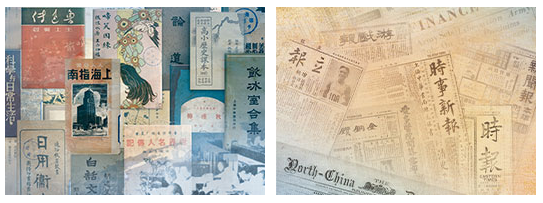
We are pleased to announce a new trial for two Chinese databases from CNBKSY (Shanghai Library) 全国报刊索引. This trial runs until 5 April 2024 and can be accessed from the following links:
Books of Modern China (1840-1949) 中国近代图书全文数据库 – inlcudes 120,000 titles
Chinese and English Newspaper of Modern China 中国近代中文报纸全文数据库 – 4,000 Chinese and English newspapers dated 1850-1951
Access is restricted to 5 simultaneous users, so please remember to log out at the end of your session.
What do you think of these databases? Have your say on this feedback form. We value your feedback.
Also available to access via the Databases A-Z.