


New A-Z list of databases for Chinese Studies
A LibGuides Databases A-Z page for Chinese eresources is now available to Cambridge University members. Our Head of Chinese Section, Dr Yan He writes:
“Cambridge University Library purchased or subscribed to a few major databases for Chinese studies including Erudition Ancient Books (爱如生古籍库) databases, National Palace Museum Journals Archive (故宮期刊知識庫), and Dacheng Guzhidui Full Text Periodical Database(大成故纸堆 ) in the past two years.
These databases provide robust support for our faculty, students and researchers at Cambridge along with our print collections. The digital content contains primary sources and secondary sources for Chinese studies in humanities and social sciences. One of our professors commented to the two recent available databases: “these databases are essential to my research and teaching.” And one MPhil student said his dissertation cannot be done without one digital newspaper database.”

12 key databases for Chinese Studies:
CHANT Databases (新漢達文庫) (包括甲骨文、金文、先秦兩漢、魏晉南北朝、竹簡、類書、説文解字) – give full-text access to all traditional texts from the Pre-Han (pre 220AD) period up to the Six Dynasties (581 AD)
Chinese Periodical Full-text Database (1911-1949) (民国时期期刊全文数据库) – contains around 10 million pieces of writing in over 20,000 different kinds of periodicals published from 1911 to 1949
CNKI/CAJ-CJP Serials Databases (中国知网期刊库)- from Tsinghua University, this database contains academic journals, conference proceedings, newspapers, reference works and patent documents
National Palace Museum Journals Archive (故宮期刊知識庫) - part of Taiwan Academic Classics, includes 《故宮英文年刊》,《故宮文物月刊》,《故宮學術季刊》and《故宮季刊》
Dacheng Guzhidui Full Text Database(大成故纸堆 ) – full-text periodical database covering approximately 7,000 journals published in China from 1830 to 1949
Diaolong Full-Text Database of Chinese and Japanese Ancient Books (雕龍 : 中國日本古籍全文檢索資料庫) – includes over 30 thousand titles of ancient Chinese and some Japanese books
Duxiu(读秀)- contains over 2 million core Chinese monographs and journals, and 500 yearbooks published in mainland China
Late Qing Full-text Database (1833~1911) (晚清期刊全文数据库) – developed by Shanghai Library, this database contains 304 journals published during the late Qing Dynasty from 1833 to1911
Erudition Ancient Books (爱如生古籍库) – includes pre-20th century texts with full-text and images from a variety of subject areas organized into four sections: Philosophy and Science, History and Geography, Art and Literature, and General Works
Oxford Language Dictionaries Online
Shen Bao Digital Archive (申报 1872-1949)- this archive gives a unique insight into the transition of China from the nineteenth century until Mao
Taiwan Electronic Periodical Services (台灣電子期刊服務網) – this full-text database covers many of the journals published in Taiwan in humanities and social sciences
More information about these databases is available from the UL Chinese Section website about e-resources for Chinese.
Highlighting the LGBTQ+ video collections on Kanopy
Kanopy have introduced a new LGBTQ+ collection of films that are available to current members of the University of Cambridge. Access is available via the Databases A-Z and University of Cambridge credentials are needed to create an account on the platform before you can stream the videos.
Films and documentaries available in the Kanopy LGBTQ+ collection include:
Rent – Based on Puccini’s classic opera La Boheme, Jonathan Larson’s revolutionary rock opera RENT tells the story of a group of bohemians struggling to live and pay their rent in the gritty background of New York’s East Village. “Measuring their lives in love,” these starving artists strive for success and acceptance while enduring the obstacles of poverty, illness and the AIDS epidemic.
Kumu Hina – Imagine a world where a little boy can grow up to be the woman of his dreams, and a young girl can rise to become a leader among men. Welcome to Kumu Hina’s Hawai’i. An incredible docu-drama that unfolds like a narrative film, KUMU HINA reveals a side of Hawai’i rarely seen on screen.
A Worm in the Heart – Shot in six cities along the legendary Trans-Siberian railway, this documentary follows queer Irish filmmaker Paul Rice and his boyfriend Liam, as they go undercover to meet with members of the LGBTQ+ community in Russia.
The Times of Harvey Milk – A true twentieth-century trailblazer, Harvey Milk was an outspoken human rights activist and one of the first openly gay U.S. politicians elected to public office; even after his assassination in 1978, he continues to inspire disenfranchised people around the world.
The Kanopy Gender Studies collection also offers a range of titles looking at gender roles, including:
Expanding Gender – These three short documentaries explore the varied identities of trans and gender expansive youth and young adults.
Masculinity / Femininity: Concepts of Gender – Masculinity/Femininity is an experimental documentary that challenges normative notions of gender, sexuality and performance. Experimental filmmaker Russell Sheaffer’s Masculinity/Femininity takes over where his short film starring James Franco, Masculinity & Me, left off.
The Gender Representation in Media collection includes the titles:
A Bit of Scarlet: Gay Characters in Post-War British Cinema – Any minority craves images of itself, and this compilation of clips from Britain’s post-war cinema archives is a testament to the closeted appearances of gay characters and sentiments.
Drag Becomes Him – An intimate glimpse inside the life of internationally acclaimed drag performer Jinkx Monsoon. The film follows the passionate pursuits that transformed a working class boy in a struggling family to an illustrious performer on a global stage.
Image by All_CC0_Public_domain from Pixabay
Crime drama on Kanopy – A watch list inspired by Cambridge University Library’s upcoming exhibition ‘Murder by the Book: A celebration of 20th century British Crime Fiction’
Inspired by Cambridge University Library’s upcoming exhibition ‘Murder by the Book: celebrating 20th century British crime fiction’ we invite you to take a look at some of the murder mystery films and shows available online to members of the University of Cambridge on the Kanopy platform.
Access is available via the Databases A-Z and University of Cambridge credentials are needed to create an account on the platform before you can view.


Murder mysteries from the big screen:
Cast a Dark Shadow – A British fortune-hunter playboy is killing his rich wives in order to inherit their wealth. Based on the 1952 play Murder Mistaken by Janet Green. (1955)
Cowboys – A compilation of six three minute short animated films which comment on contemporary values through a reinterpretation of the myths of the old Wild West. Film three is Murder! – an eye for an eye, a tooth for a tooth. The silent majority get their way. (1992)
Deadly Sweet – A French actor finds his business contact lying murdered on the floor. Rather than call the police, he decides to protect the young woman at the scene and nail down the true killers, putting him on a collision course with the London underworld. Loosely based on the novel Il sepolcro di carta written by Sergio Donati. (1967)
Jet Storm – Passengers on a trans-Atlantic flight from London to New York discover that one of them believes a fellow passenger is the hit-and-run driver who killed his child and has smuggled a bomb on board and intends to use it. (1959)
Jigsaw – A woman is found murdered in a house along the coast from Brighton. Local detectives Fellows and Wilks lead an investigation, methodically following up leads and clues. Based on Sleep Long, My Love by Hillary Waugh (1962)
Loving Memory – A brother and sister living in an isolated farmhouse in Yorkshire accidentally run down and kill a cyclist. (1970)
Sherlock Holmes – Terror by Night – The film’s plot is a mostly original story not directly based on any of Arthur Conan Doyle’s Holmes tales, but it uses minor plot elements of “The Adventure of the Blue Carbuncle,” “The Adventure of the Empty House,” “The Disappearance of Lady Frances Carfax,” and The Sign of Four. (Wikipedia) (1946)
Sherlock Holmes – The Woman in Green – The film follows an original premise with material taken from “The Final Problem” (1893) and “The Adventure of the Cardboard Box . (Wikipedia) (1945)
The Hawk – A Hitchcockian style thriller of a housewife who thinks her husband is a serial killer. (1993)
Wanted for Murder – As the son of a Victorian hangman is driven insane by thoughts of his father’s profession, the young man emulates his father by strangling young women. Based on a play of the same name by Terence de Marney and Percy Robinson. (1946)


The Hitch-hiker – From the USA. The only film noir film to be directed by a woman (Ida Lupino). (1953)
Les Vampires – From France. An intrepid reporter and his loyal friend battle a bizarre secret society of criminals known as The Vampires. (1915)
Salvatore Giuliano – From Italy. Filming in the exact locations and enlisting a cast of native Sicilians once impacted by the real Giuliano, director Francesco Rosi harnessed the facts and myths surrounding the true story of the bandit’s death to create a startling exposé of Sicily and the tangled relations between its citizens, the Mafia, and government officials. (1961)
The Flying Ace – From the USA. A rural crime drama revolving around a pair of rival aviators,THE FLYING ACE illuminates the fact that many films made for African-American audiences were less concerned with race than with making popular entertainment in the traditional Hollywood style. (1926)
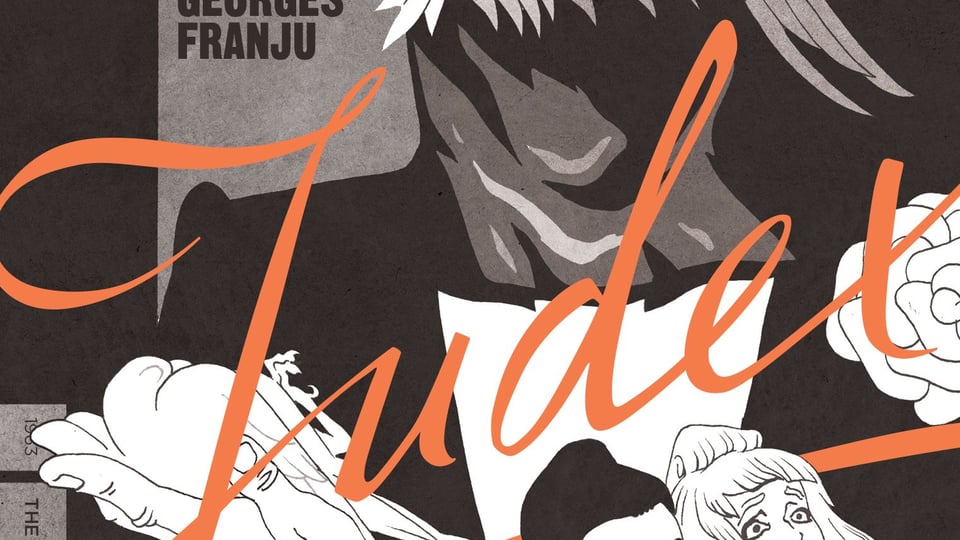
Judex – From France. This effortlessly cool crime caper, directed by Georges Franju, is a marvel of dexterous plotting and visual invention. (1963)


Murder on the small screen:
Cruel Train – Based on Emile Zola’s ‘La Bete Humaine’, this stylish film noir is set in Britain during the Blitz.
Dalziel & Pascoe: S2, S3, S4 – Andy Dalziel does not suffer fools gladly. So when the inexperienced, soft-spoken, whiz-kid graduate Peter Pascoe joins his team at Mid-Yorkshire CID, there could be problems. Based on a book series by Reginald Hill. (1996-2007)
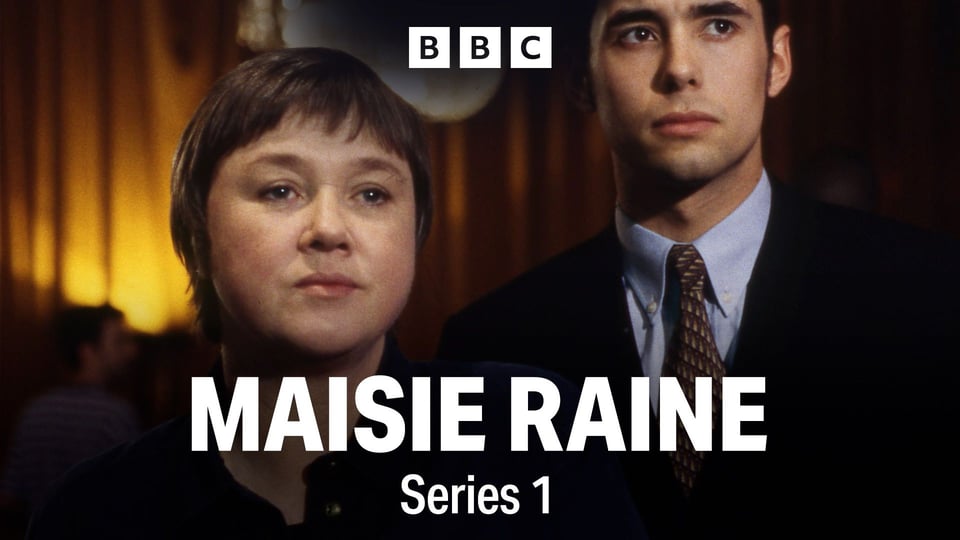
Maisie Raine: S1 – Detective Inspector Maisie Raine is a no-nonsense policewoman with years of experience and an instinct for people in trouble. (1998)
Father Brown – In the idyllic English countryside of the 1950s, murder and foul play are afoot. Based on the book series by G.K. Chesterton. (2013-)
Luther – Idris Elba stars as maverick detective John Luther in this gripping, smart and entertaining thriller. (2010-2019)
Quirke – A consultant pathologist in the Dublin city morgue in the 1950s, Quirke is a powerful character more at ease among the cold silent slabs than the company of his fellow men. Based on a book series by John Banville.(2014)
Scott & Bailey – Moving and exciting drama series follows the lives of Janet Scott and Rachel Bailey – Detective Constables in a Manchester Major Incident Team led by the formidable DCI Gill Murray. (2011-2016)
Death in Paradise – DI Richard Poole is sent to the paradise island of Saint-Marie in the Caribbean to solve an impossible murder. A book series was created by Robert Thorogood based on the TV series. (2011-)
The following text is taken from our day 11 of our 2023 Advent Calendar, authored by Melendra Sutliff Sanders, Research Support Librarian / German / Film Studies, Modern & Medieval Languages and Linguistics Library.
Looking for some thought-provoking entertainment?
Have a look at Kanopy’s collection of award-winning films and documentaries.
Follow the University of Cambridge Kanopy Link to create account. All you need is your University of Cambridge credentials.
Once you’ve logged in, you can stream 100s of award-winning films and television shows. It’s easy to search for specific titles. Or, if you’re open to suggestions, check out the Browse options.
All films have close captioning and can be viewed from anywhere in the world.
Visit the Film and Screen Studies LibGuide for access to more resources available to you in Film Studies.
Aris & Phillips Classical Texts Online – trial access
Students and faculty at the University of Cambridge now have online access to select content in Aris & Phillips Classical Texts Online as part of a 30-day free trial taking place from January 22nd 2024 to February 22nd 2024. Please send us your feedback about this trial via the online feedback form.
Aris & Phillips Classical Texts Online makes available over 150 invaluable editions of Greek and Latin texts. The Aris & Phillips Classical Texts series was founded in 1979 to publish modern editions of Classical Greek and Latin texts, with substantial introductions, facing-page text and English translation, with extensive accompanying commentaries. Volumes are designed to be accessible to those without Greek or Latin and support those learning the original language.
You can access 75 volumes in classical studies in the free trial collection. Titles included in the trial include:
Longus: Daphnis and Chloe
This edition of Daphnis and Chloe , the best known of the Greek romances, provides the first modern commentary in English on this intriguing work. This is the story of two young people growing up as goatherd and shepherdess, and their discovery of love, sex and their true selves.
Augustine: Soliloquies and Immortality of the Soul
Augustine’s Soliloquies and the Immortality of the Soul explore the primacy of mind over things of sense, and the immortality of the soul. These central tenets of Neoplatonism are not mere theoretical questions for Augustine —the work offers an insight into his emotions at this time. Latin text with facing translation, introduction and commentary.
This edition is produced with particular concern for the student coming to Homer for the first time. The text is given with facing translation and commentary, but the usual apparatus criticus at the bottom of each page is replaced by brief notes on Homeric language. This makes the text considerably more accessible for those without Homeric Greek. These notes are cross-referenced to an introduction on Homeric language for those meeting it for the first time. Textual matters are discussed in the commentary itself, though this is, as is usual in the series, mainly concerned with the meaning of the epic.
Text from the Liverpool University Press platform
British Library Newspapers Part VI: Ireland, 1783-1950
Cambridge University Libraries now provides access to the digital archive British Library Newspapers Part VI: Ireland, 1783-1950
Access the British Library Newspapers Part VI: Ireland, 1783-1950 archive here or via the Cambridge University Libraries E-resources A-Z.
Although there were fewer restrictions, and they were not subject to the Stamp Acts, the growth of Irish newspapers was slow compared to England throughout the eighteenth century. Many of the earliest publications originated in Dublin, and a provincial press was slower to emerge. From the early 1730s, the Irish press began to develop its own tone as it moved away from adapting and reproducing news from outside of Ireland, and by 1760 there were more than 160 newspapers, dominated by Dublin. This archive begins at the point where the Irish press had started to become ‘Irish’, rather than an extension of the English press; and when provincial and politically motivated publications began to increase in quality and prominence.
The social and legal structures of eighteenth-century Ireland meant that the press was dominated by Protestant businesses until the early nineteenth century when a ‘Catholic press’ emerged. As a result, there was “a limitation on the circulation possibilities of the newspapers, and [Protestant dominance] tended to dictate an editorial content that stressed exclusivity and conservatism”. As the press expanded, a greater variety of newspapers reached the market, bringing with them a greater variety of voices and perspectives. Emergent social, economic, political, and religious ideologies that combined to form the underlying allegiances and divisions in Ireland through the nineteenth and early twentieth centuries generated their own publications, which are represented among the selected titles in this archive.
By Keogh Brothers Ltd., photographers [1] – Life goes on…, National Library of Ireland on The Commons, No restrictions, https://commons.wikimedia.org/w/index.php?curid=24252282
Political Extremism and Radicalism
Cambridge University Libraries now provides access to the digital archive Political Extremism and Radicalism
Access the Political Extremism and Radicalism archives here or via the Cambridge University Libraries E-resources A-Z.
Liberal democracies of North America, Europe and Australasia throughout the twentieth century have experienced a variety of forms of extremism and radicalism that have shaped mainstream political thinking as well as cultural norms.
To comprehend modern governmental and societal systems researchers must understand the environment that created them, their origins, and their adversaries. In the series Political Extremism and Radicalism Gale provides insight on unorthodox (by contemporary standards), fringe groups from both the right and left of the political spectrum through rare, hard to access primary sources.
Content supports scholars and students answering questions on philosophical, social, political and economic ideologies as well as on contemporary issues surrounding gender, sexuality, race, religion, civil rights, universal suffrage, and much more.
By unknown – Tuscaloosa Independent Monitor or Independent Monitor,’, Public Domain, https://commons.wikimedia.org/w/index.php?curid=242275
State Papers Online Colonial: Asia Part I: Far East, Hong Kong, and Wei-Hai-Wei
Cambridge University Libraries now provides access to the digital archive State Papers Online Colonial: Asia Part I: Far East, Hong Kong, and Wei-Hai-Wei
Access the China and the Modern World archives here or via the Cambridge University Libraries E-resources A-Z.
State Papers Online Colonial: Asia, Part I: Far East, Hong Kong, and Wei-Hai-Wei is the first part of a major new programme bringing the British Colonial Office files to a global audience. State Papers Online Colonial Asia will eventually be comprised of four parts and is the digitisation of the British Colonial Office’s files (CO series) of documents now housed in The National Archives in the United Kingdom.
These working files bear witness to the two very different sides in the colonial relationship: a British Government whose main priority was the acquisition of commodities, wealth and labour; and the local people living under colonial rule and British-style institutions for law, health, education, policing, defence, agriculture and industry.
All of the documents have been imaged in colour, which will enable users to clearly read the
annotations in different colours by Colonial Office officers and ministers commenting on the documents, bringing an extra insight into the thoughts and actions of the time.
By Unknown author – C. P. Lucas: A Historical Geography of the British Colonies, Second Edition, Volume I: The Mediterranean and Eastern Colonies,. Clarendon Press, Oxford, 1906., Public Domain, https://commons.wikimedia.org/w/index.php?curid=46400911
China and the Modern World: Hong Kong, Britain, and China Part II: 1965-1993
Cambridge University Libraries now provides access to the digital archive China and the Modern World: Hong Kong, Britain, and China Part II: 1965-1933.
This follows the purchase of the archive China and the Modern World: Hong Kong, Britain, and China Part I: 1841-1951.
Access the China and the Modern World archives here or via the Cambridge University Libraries E-resources A-Z.
Digitised primarily from the records of British Foreign and Commonwealth Office (FCO 40), this collection continues where Hong Kong, Britain and China, 1841–1951 (Part I) left off, and documents the process of Hong Kong manoeuvring, surviving, thriving, and transforming into a modern international metropolis and financial centre in the wider context of the Cold War.
Consisting of all declassified volumes—that are directly related to Hong Kong and those that affect all British colonies or territories—from the National Archives classes FCO 40 and 21, China and the Modern World: Hong Kong, Britain and China Part II, 1965–1993 provides scholars with essential reference material for researching Hong Kong and its interactions with mainland China, UK, US, Taiwan, and other parts of Asia. It will appeal to students and researchers around the world, particularly in Asia Pacific, Britain, Europe, and North America, who are engaged in researching the twentieth-century history of China, Britain and British Commonwealth, and Sino-British relations during the era of Cold War.
By Diego Delso, CC BY-SA 3.0, https://commons.wikimedia.org/w/index.php?curid=29153071
Public Petitions to Parliament & House of Lords Parliamentary Papers : Trial access
Trial access is now available to the Public Petitions to Parliament & House of Lords Parliamentary Papers on the ProQuest platform.
This trial runs until 14 February 2024.
On or off campus, access via this link.
To search Petitions or House of Lords only, you should go to Advanced Search and untick “Select all” (the default display) and select “Public Petitions 1833-1918” or “House of Lords Papers 1714-1910”.
Please send your feedback using this form.
“Petitioning was by far the most popular form of political participation, but it has long been overlooked by historians and social scientists preoccupied with elections and election rituals, campaigns to extend the right to vote, and the rise of national political parties. However, the utility to scholars of public petitions is not just limited to political historians studying the groundswell of public pressure for the expansion of the voting franchise. Containing petitions on ecclesiastical issues, crime and criminals, colonies, taxation, education, and on every other issue of interest to the populace of Britain, this project appeals to all social, cultural, and religious scholars of Britain. From religious scholars interested on Methodism and the Church of England, scientists concerned with pollution and pollution controls during the Industrial Revolution, and sociologists concerned with how these issues were influenced by and influenced the People, the popular constitutionalism inherent in this collection (as opposed to the “top down” approach to looking at history), is at the cutting edge of historical research today and has wide appeal across campus.
Users will be able to analyze the social, geographical, religious, and gender compositions of these issues of importance to Britons and allow for detailed textual and rhetorical analysis of the petitions. It will allow researchers to exploit new sources on the formative role of petitions to Parliament during the nineteenth century (1833-1918), an unparalleled period of political modernization and democratization in Britain.” — https://about.proquest.com/en/products-services/publicpetitionsparliament/
Missionary Studies : Trial access
We are pleased to announce a new trial for Missionary Studies from Adam Matthew Digital. This trial runs until 16 February 2024.
Please note the terms and conditions that apply during this trial here – no downloading is possible.
Tell us about your use of this resource via this feedback form.

Missionary Studies comprises a broad selection of missionary collections, representing a global range of Christian missions, churches and denominations.
These primary sources are an important resource for the study of missionary work, educational work, medical work, evangelism, political conflict and the emergence of indigenous churches. The collections are global in scope, with Africa, East and South Asia, Australasia and the Pacific, and the Americas all well-represented. The sources will be of interest to scholars in a range of fields, from missiology to colonial history and anthropology.
Also available to access via the Databases A-Z.
SciFinder-n
The University of Cambridge now has access to SciFinder-n from CAS, a division of the American Chemical Society.
CAS SciFinder-n provides researchers with chemical substance information, informing your critical research activities with authoritative details on chemical substances and their related chemical structures, chemical names, regulatory information, and properties, including CAS Registry Numbers®.
At its core, SciFinder comprises a “science-aware relevance engine” highly valued in the industry for enabling smarter searching by anticipating your information needs and accelerating your work. Details from global scientific references are added to CAS References every day to keep you up to date on the world’s published scientific patent and journal literature across multiple disciplines. CAS scientific analysts extract and verify a multitude of data and key insights from global scientific references, making connections and uncovering trends only possible with the combined power of expert human analysis and advanced data technology.
Replacing the former SciFinder, SciFinder-n performs a full retrosynthetic analysis powered by the renowned CAS collection of reactions, reducing your synthetic planning time. Diverse synthetic routes combine steps from the literature and predicted steps based on rules trained on our full set of reactions.
Included in the SciFinder-n Discovery Platform are CAS Formulus and CAS Analytical Methods.
CAS Formulus is an integrated formulations database and workflow solution. With curated information from patents and journals spanning various industries, CAS Formulus helps formulation scientists evaluate ingredients, find suppliers, and explore regulatory requirements, all in one easy interface.
CAS Analytical Methods provides a single source for searching and comparing the latest published scientific methods across multiple fields of study. Providing easy to read experimental details, CAS Analytical Methods helps get you back in the lab faster.
Find out more at CAS SciFinder-n training & support.
Access SciFinder-n via the Cambridge University Libraries E-Resources A-Z.
SciFinder-n Analytical Methods
When accessing SciFinder for the first time you will be prompted to create an account.
SciFinder-n is provided by the Yusuf Hamied Department of Chemistry and Cambridge University Library.